Coronet or Indian Head: three clues to read
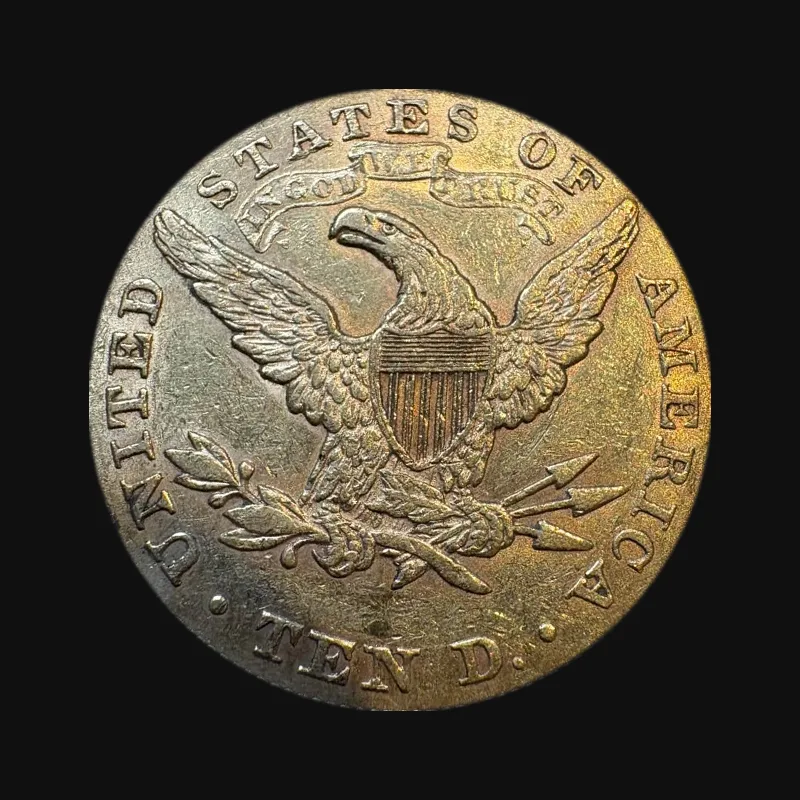
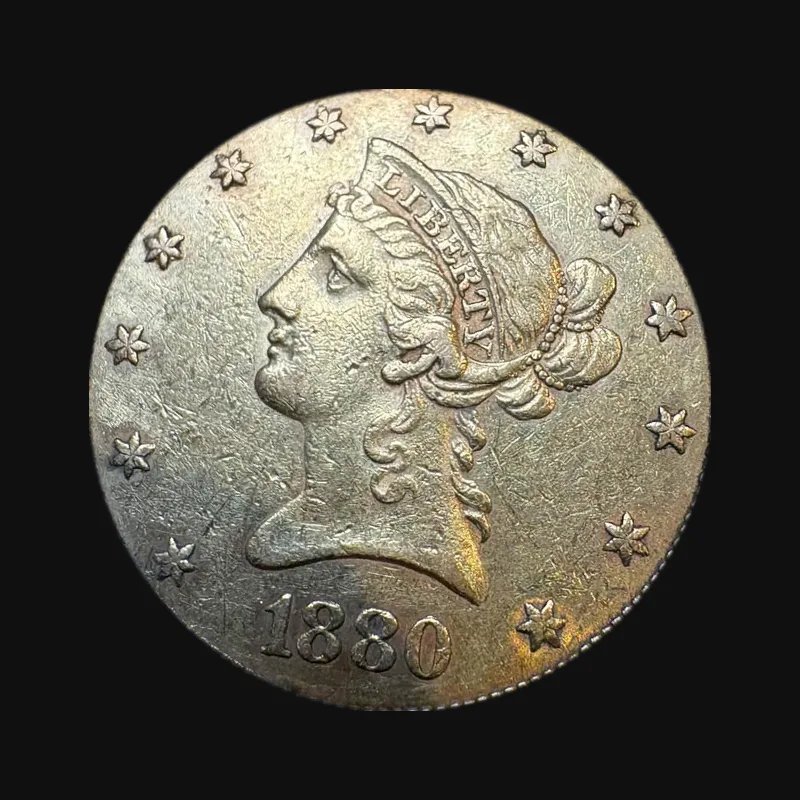
The portrait. A coronet and a bun point to the Coronet. A large feathered headdress points to the Indian Head. On the reverse, the Coronet bird spreads its wings and holds arrows and a branch; the Indian Head bird stands, wings folded, on a bundle of arrows.
The rim. Run a finger along the edge: reeding means Coronet, raised stars mean Indian Head, 46 of them up to 1911 and 48 afterwards.
The motto. The Coronet only receives IN GOD WE TRUST in 1866; an earlier coin lacks it. Saint-Gaudens chose to keep it off his design. After protests, Congress made it compulsory again in May 1908, so the eagles of 1907 and some of those of 1908 go without it.
Spotting fake eagles
Both designs have been copied. Among the examples published by NGC are an 1899 Coronet and a 1912 Indian Head, each struck in gold at the regulation weight. Weighing therefore settles nothing on its own. On these copies the relief looks blunted, the fields show small blisters, the rim has spikes, and tooling can be made out where the dies were reworked.
Before anything else, a few checks weed out the crudest imitations:
- Precision scales (0.01 g): expect about 16.7 g, a little less on a heavily circulated piece.
- Caliper: the module is close to 27 mm.
- Magnet: it should exert no pull at all; the slightest grip gives a fake away.
- Ring: balanced on a fingertip and tapped gently, a solid gold coin resonates for a long time; a dull thud calls for caution but proves nothing by itself.
- Anachronisms: a Coronet dated before 1866 with the motto, a CC later than 1893, a D earlier than 1906, an Indian Head with a reeded edge are all impossible coins.
Half eagle, eagle, double eagle: the right module
In the same years the $5 and $20 pieces carried the same designs as the eagle. The eye may hesitate; measurement does not:
- Half eagle ($5): 8.359 g for 21.6 mm;
- Eagle ($10): 16.718 g for close to 27 mm;
- Double eagle ($20): about 33.44 g for 34 mm.
Lastly, the value is written on the reverse, shortened to “TEN D.” on the Coronet and spelled out as “TEN DOLLARS” on the Indian Head.
Reading the state of preservation
On the Coronet, the tip of the coronet and the hair just above the eye fade first, followed by the curls that rise above the coronet. On the reverse, the ends of the wings and the eagle's neck are the first to lose detail.
On the Indian Head the same logic applies to the high points: headdress feathers, cheek, then the eagle on the reverse. Work under a lamp with a loupe magnifying ten times.
Plenty of eagles ended up as pendants or were cleaned. Leftover solder, an edge dressed with a file or an over-regular shine all show up under the loupe. Avoid any rubbing.