Three questions to put a name to the coin
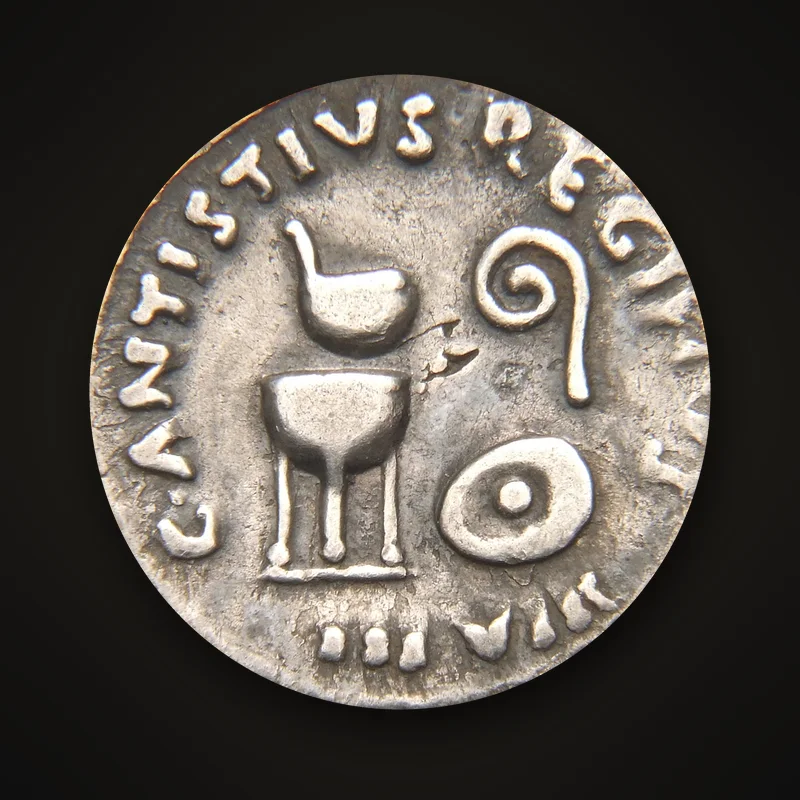
Faced with a box of old coins inherited from a house in the hinterland, start by sorting them by metal and size. A large, thick brass coin, often more than 3 cm across, is frequently a sestertius. A silver coin the size of a fingernail is usually a denarius. A small, thin brown coin with a radiate portrait very often belongs to the 3rd century (antoninianus); smaller still and in bronze, to the 4th century (the follis and its successors).
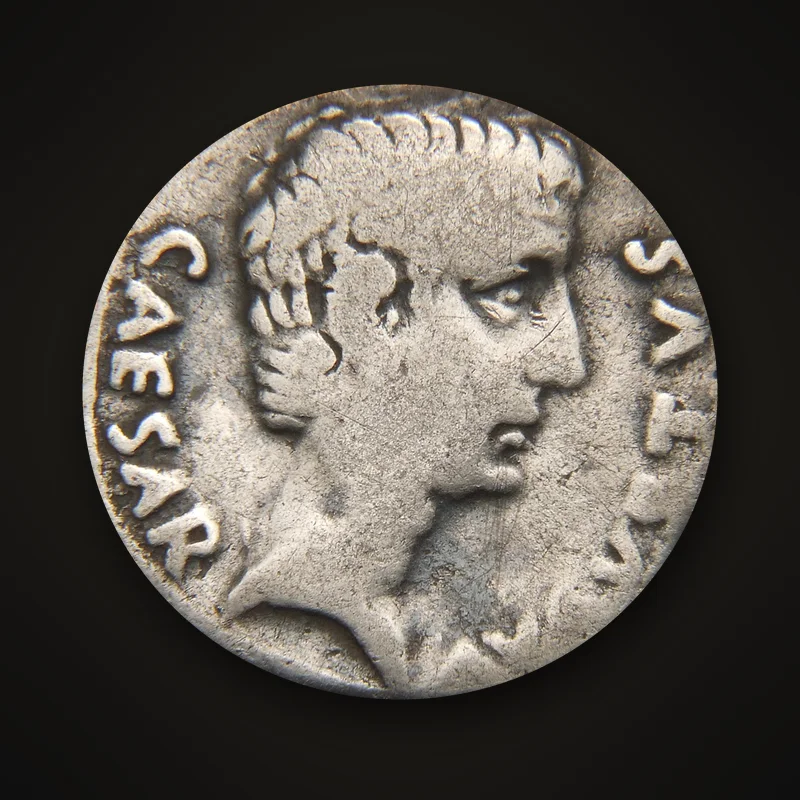
Second question: who is depicted? The name is read on the obverse, between the titles. It often comes after “IMP CAES” or before “AVG”. A radiate crown generally signals a double denomination (antoninianus, dupondius), a laurel wreath a single one.
Third question: where and when? On late bronzes, the letters in the exergue identify the mint, often preceded or followed by a workshop letter: “ARL” or “CONST” for Arles, “LVG” for Lyon, “TR” for Trier. With these three elements, a search in RIC or on Numista becomes possible. Coins of the same period struck in the Greek East, with Greek legends, are classified separately (see Greek coins).
Under the loupe: ancient, imitation or souvenir?
A Roman coin can be false in three ways. First, as a contemporary copy. Plated denarii, made of a copper core under a thin silver skin, already circulated in antiquity: a flake or a crack reveals the red metal. When official coinage ran short in the western provinces, local workshops also produced imitation bronzes and antoniniani, smaller, clumsily drawn and with faulty legends. They have their own interest, but must not be confused with official issues.
Second, as an early creation for collectors. In the 16th century, Giovanni da Cavino, in Padua, engraved sestertii in the antique manner; some reproduce types that were never struck, such as a sestertius of Otho. In the 19th century, Carl Wilhelm Becker in turn made dies imitating ancient coins. These pieces, and the casts taken from them, regularly turn up in old collections.
Third, as a modern fake or a souvenir. Under the loupe, a cast copy shows a grainy surface, pitting, blurred letters and a seam on the edge. Recent struck copies are more careful, but their patina looks too even or powdery. Medals with an emperor's profile sold in site shops have a perfectly round flan and a metal that is too yellow. The guide to spotting a fake coin (in French) details these checks.
Wear, patina, centring: describing the condition
The grading vocabulary (F, VF, EF) applies to ancient coins, but you do not judge the same things as on a 20th-century franc. On the obverse, follow the portrait: the eye, the ear, the curls of the hair and the leaves of the wreath fade first. On the reverse, the head and torso of the figure, then the folds of the drapery.
Two criteria count as much as wear. Centring, first: the flan was often smaller than the die or badly placed, so that part of the legend, sometimes the emperor's name, falls outside the field. Patina, next, on bronzes: green, brown or black, it formed over centuries in the ground. Smooth and stable, it protects the coin; flaking, or dotted with powdery light-green spots, it signals ongoing corrosion that should be shown to a numismatist.
The most useful rule fits in one sentence: do not rub anything. A stripped bronze loses its patina for ever, and a denarius treated with silver polish takes on a shine that makes it suspect. The guides to coin grades and to cleaning a coin (in French) explain why.
Key dates, from the Republic to Constantine
- c. 211 BC: during the Second Punic War, Rome creates the silver denarius. Under the Republic, the moneyers choose the designs, often to honour their ancestors.
- Late 1st century BC: Caesar, then Augustus, set up a lasting system, from the gold aureus to the copper as; the ruler's portrait becomes the norm. Lyon strikes coins from the reign of Augustus.
- 64: Nero reduces the weight of the aureus and the denarius.
- 215: the antoninianus appears under Caracalla. Through the crises of the 3rd century, its silver content collapses.
- 294: Diocletian recasts the system around a silvered bronze, the follis, and multiplies mints marked in the exergue.
- c. 309-310: Constantine launches the gold solidus at Trier, which keeps its weight for centuries in the Byzantine Empire. Arles and Trier are then among the major mints of the West.
That leaves the question of origin. A Roman coin is lawfully passed on through inheritance, an old collection or a purchase from a professional. In France, searching for archaeological objects with a metal detector requires a prefectoral authorisation (article L542-1 of the Heritage Code), and a chance find must be declared at the town hall (article L531-14). Keep any paper that tells where a group of coins comes from.